Free: Why Science Hasn't Disproved Free Will by Alfred R. Mele
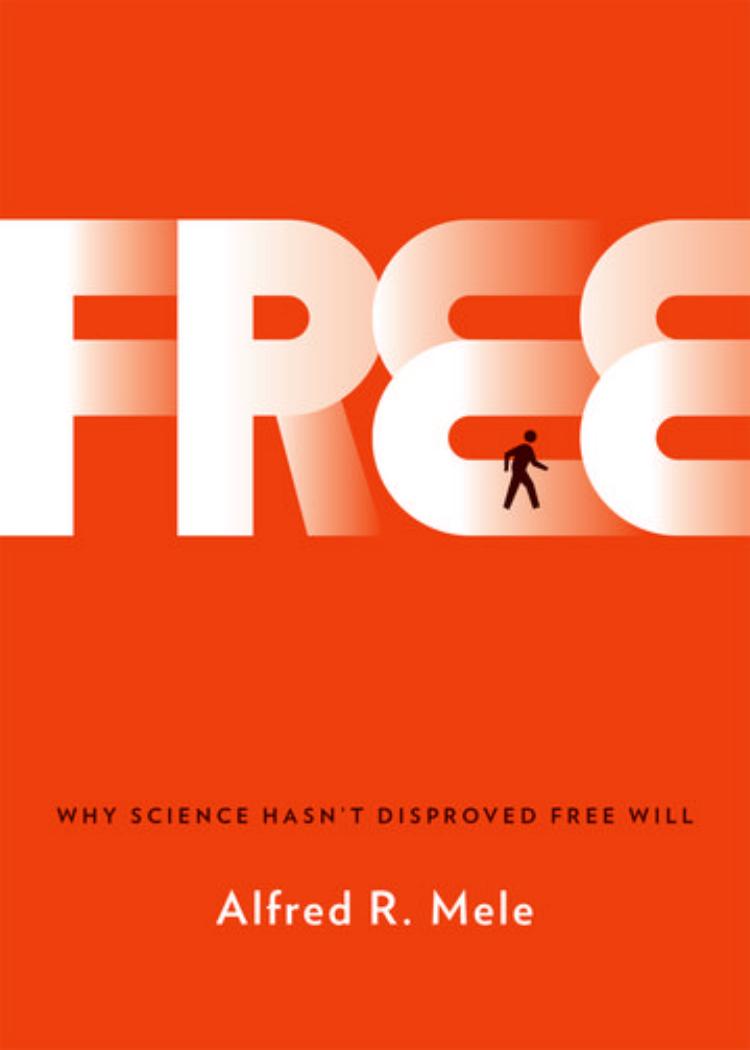
Author:Alfred R. Mele
Language: eng
Format: mobi, pdf
Publisher: Oxford University Press
Published: 2014-09-02T03:00:00+00:00
Wegner’s automaticity argument in a nutshell
1. Some human actions aren’t caused even partly by conscious intentions (and the same goes for the neural correlates of conscious intentions; some actions aren’t caused by them either).
2. All human actions are caused in basically the same way.
3. So no human actions are caused even partly by conscious intentions (and the same goes for the neural correlates of conscious intentions). (from 1 and 2)
4. People don’t have free will unless their conscious intentions (or their neural correlates) are sometimes among the causes of corresponding actions.
5. So people don’t have free will. (from 3 and 4)
This argument is unpersuasive. First, why do all actions have to be caused in the same way? There’s a big difference between unknowingly moving my hand in the direction of an object I hid or toward the street I’m thinking about and intentionally leaving my hotel room by 8:00 a.m. in order to show up on time for an important meeting in a city I’m visiting for the first time. For one thing, although my hand movements involved no conscious planning, my decision about when to leave was preceded by conscious information gathering about the best route to the meeting and how long it would take to get there. Second, I described evidence that conscious intentions sometimes are effective, that is, evidence that they lead to the intended actions. If conscious intentions (or their neural correlates) are sometimes among the causes of corresponding actions, then Wegner’s threat to free will disappears.
Wegner says that something he regards as necessary for free will never happens. And I’m saying that this necessary thing sometimes does happen—that conscious intentions (or their neural correlates) sometimes are among the causes of corresponding actions. Wegner’s claim that conscious intentions are never among the causes of human actions is a very bold one. It’s about every single action that any human being has ever performed. Yet, he backs it up only with Libet’s data and evidence from fringe cases, combined with the highly disputable assertion that all human actions are caused in basically the same way (if the fringe actions and wrist flexes in Libet’s experiments don’t have conscious intentions among their causes, then no human actions do). My claim that conscious intentions (or their neural correlates) are among the causes of some human actions is much less bold. And I have backed it up with directly relevant, powerful evidence about conscious implementation intentions. Think about it: which of us is on firmer ground here?
Download
Free: Why Science Hasn't Disproved Free Will by Alfred R. Mele.pdf
This site does not store any files on its server. We only index and link to content provided by other sites. Please contact the content providers to delete copyright contents if any and email us, we'll remove relevant links or contents immediately.
| Anthropology | Archaeology |
| Philosophy | Politics & Government |
| Social Sciences | Sociology |
| Women's Studies |
The remains of the day by Kazuo Ishiguro(9000)
Tools of Titans by Timothy Ferriss(8396)
Giovanni's Room by James Baldwin(7346)
The Black Swan by Nassim Nicholas Taleb(7129)
Inner Engineering: A Yogi's Guide to Joy by Sadhguru(6796)
The Way of Zen by Alan W. Watts(6614)
The Power of Now: A Guide to Spiritual Enlightenment by Eckhart Tolle(5783)
Asking the Right Questions: A Guide to Critical Thinking by M. Neil Browne & Stuart M. Keeley(5775)
The Six Wives Of Henry VIII (WOMEN IN HISTORY) by Fraser Antonia(5515)
Astrophysics for People in a Hurry by Neil DeGrasse Tyson(5190)
Housekeeping by Marilynne Robinson(4449)
12 Rules for Life by Jordan B. Peterson(4305)
Ikigai by Héctor García & Francesc Miralles(4275)
Double Down (Diary of a Wimpy Kid Book 11) by Jeff Kinney(4272)
The Ethical Slut by Janet W. Hardy(4253)
Skin in the Game by Nassim Nicholas Taleb(4250)
The Art of Happiness by The Dalai Lama(4130)
Skin in the Game: Hidden Asymmetries in Daily Life by Nassim Nicholas Taleb(4007)
Walking by Henry David Thoreau(3962)
